I have voiced in the past my distaste for the old OSR manifestos and how they frame their idea of play, so today I decided to be a little more positive and try to state one of the reasons I like OSR games and were is the draw to me, instead. Even if it diverges a bit from the current zeitgeist for the scene.
Distilling the thought to a minimum, I enjoy the idea of a living world, with an internally consistent logic that exists independently from the players, and in many ways, even independently from the referee, in which the PCs decisions come purely out their own agency in the context of that world. i.e. I enjoy ye olde gygaxian naturalism.
Turns out, weirdly, that even in the Year of Our Lord Twenty Twenty Six old D&D, and iterations of it, are still some of the most idiomatic implementations of that idea. Tools like reactions, morale, random encounter tables and the like are still truly great tools to invoke it. Also, there are no intrusive mechanics to undermine it, nothing that implies players are interacting with anything but a living, breathing world, there’s no story being told here, beyond the one you can tell after the fact. So there are no narrative tools to imply that is what is actually happening.
There is no fourth wall, there’s no worry about pacing, plot, or what have you, there are no inherent climaxes, just the ones that are seen as such in retrospect. If PCs spend a full session trying open a door, so be it, that’s what they settle on doing, they are the ones to decide if that’s boring and they want to try something else, the world itself won’t care or behave differently.
That all being said, I don’t feel that extreme challenge and lethality are all that necessary to evoke all of that. If I want to kill my players horribly I will just run Alien. When I run a D&D-ish sandbox I usually want to evoke a sense of belonging in the world lived in, too much harshness actually undermines that, I prefer the world to be a little more chill. The adventurers face dangers out of their own agency, not because the very fabric of reality pushes them into it all the time. They live in worlds in which there are farms in which they could spend their lives working as peasants (or something equivalent if a more modern setting), they could just run far away, they could beware the wilderness and the dark corners of the world, like most NPCs they interact with. Yet, they choose not to.
That’s why my system of choice to use as a base has been Beyond the Wall for a good while. It generates random emergent characters, yes, yet, competent, sturdy and with a built in reason to care about the world they live in. The thief can show up with a 19 roll-under Stealth, and I just let them have it, it doesn’t make them less likely to get the tone and still interact with the world diegetically.
I still believe it is a bit bare, as a system, and not crunchy enough for my liking, but since it is built on the same base, it is trivial to simply port back more formal rules from older systems into it. I just use old BX rules for distances and travel with it and it works like a charm.
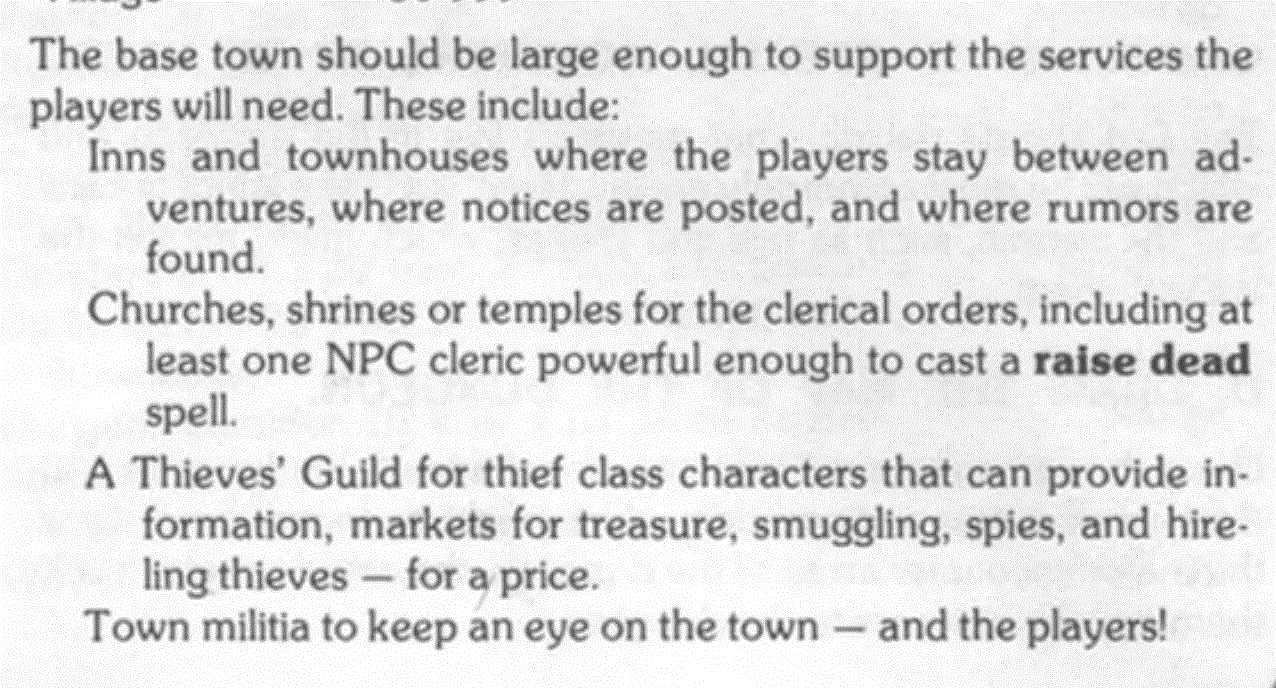
Even when I decide to be cheeky and run something closer to RAW BX, I will use some old tricks like “there’s an old priest in village who knows Raise Dead” (which technically is RAW and explicitly suggested the book), we need that for a proper DunMeshi campaign after all.